





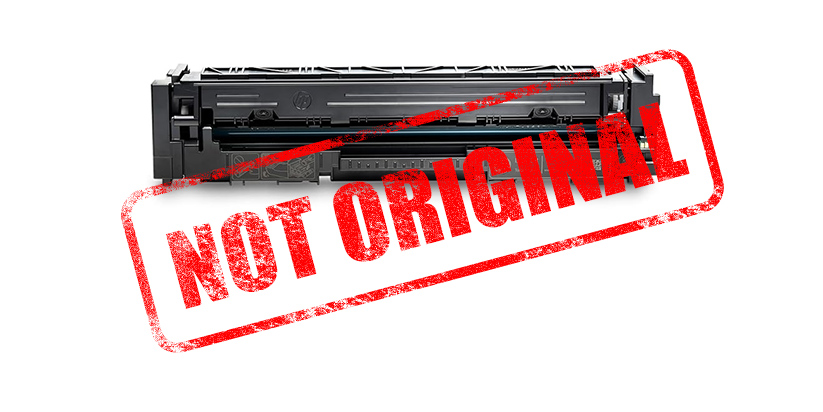
An original toner cartridge is manufactured by the same company that produced your printer and has passed official quality and compatibility tests. Identifying it is important because counterfeit consumables can reduce print quality and cause damage that is not covered by the warranty.
In this article, we will examine the specific signs that help you determine whether the purchased cartridge is authentic.
What Does “Original” Toner Cartridge Mean?
Original cartridges, known as OEM (Original Equipment Manufacturer), are produced by the printer brand – for example HP, Canon, Brother, or Xerox. They are designed specifically for certain models and are tested to comply with the device’s technical parameters.
According to official information from HP and Brother, original consumables undergo quality control that ensures proper toner distribution, stable electrostatic response, and precise interaction with the drum and fuser unit.
Visual Signs of Authenticity
The first step is a careful inspection of the packaging and the cartridge itself.
Pay attention to the following elements:
-
clear and high-quality manufacturer logo – without blurring or printing defects;
-
security hologram – it should change colors or symbols when tilted;
-
serial number and product code – matching on both the box and the cartridge;
-
no spelling errors on the packaging;
-
tightly sealed box with no signs of reopening.
Manufacturers use complex security features that are difficult to replicate with high precision.
Verification via Code and Digital Validation
Many brands provide online authenticity verification. For example, HP offers a validation system via QR code or serial number on the security label, which can be checked through the official website.
Brother and Canon also use holographic labels with specific security elements described on their corporate pages. If the code is not recognized by the official system, this is a serious warning sign.
Printer Behavior After Installation
Modern devices include intelligent chips to communicate with the consumable.
With an original cartridge:
-
the printer reports toner levels correctly;
-
there are no incompatibility warning messages;
-
print quality is consistent and free from repeating defects.
If you receive an “unrecognized consumable” message or notice unusual lines and spots from the first pages, authenticity may be in question.
Price and Retailer Differences
Price is an indicator, but not the only criterion. If the value is significantly below the average market price for the respective model, the likelihood of a counterfeit product is high.
It is advisable to purchase from:
-
authorized resellers;
-
official online stores;
-
companies with clear contact details and genuine reviews.
Avoid anonymous platforms without transparent information about the product’s origin.
Risks of Using Counterfeit Cartridges
Counterfeit toners may contain low-quality powder with improper granulation, which can lead to:
-
contamination of internal components;
-
uneven fixation on paper;
-
damage to the drum or fuser;
-
warranty voidance if a causal relationship is proven.
Official manufacturer warranty terms often exclude damage caused by non-original consumables.
Key Points at a Glance
To identify an original toner cartridge:
-
check the logo and print quality on the packaging;
-
inspect the security hologram;
-
validate the serial number online;
-
buy from a reliable source;
-
monitor the printer’s response after installation.
Investing in an original consumable means investing in stability, predictable costs, and long-term protection of your device.
FAQ – Frequently Asked Questions
-
Can a counterfeit cartridge look completely identical to the original?
Yes, visual imitation can be very close, which is why verifying security codes is important.
-
Does an original cartridge always have a security hologram?
Most major manufacturers use holograms or QR codes as part of their security system.
-
What should I do if I doubt authenticity after purchase?
Contact the manufacturer through the official website and provide the serial number for verification.
-
Can a low price alone be proof of a counterfeit?
It is not an absolute criterion, but a significant deviation from market value is a warning sign.
Author: Vasil Nikolov
Co-founder and Managing Director of Toner Stream Ltd.