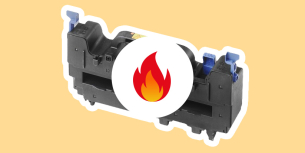







Printer repair is worthwhile when the device is relatively new, has good performance, is compatible with modern technologies, and the repair cost is significantly lower than purchasing a new model. In many cases, a quality printer is a long-term investment that can operate reliably for years with proper maintenance.
In this article, we will explore when it makes sense to invest in repair and why modern printers often deserve a second chance.
What are the main advantages of modern printers?
Modern printers are not just printing devices. They are an integrated part of the office or home ecosystem and often include features that make them a valuable long-term resource.
Among the key advantages that justify investing in repair are:
-
High print speed
Many laser and inkjet models offer speeds of 20 to over 40 pages per minute in office environments. This means stable performance even with high workloads. -
Low cost per page
Laser printers and ink tank models often have a lower cost per page compared to basic low-cost devices. This makes them economically efficient in the long term. -
Wireless connectivity
Wi-Fi, Ethernet, and mobile printing via apps are standard in most modern models. If your printer already supports these technologies, repairing it preserves this functionality. -
Multifunctionality
Scanning, copying, and even fax are included in many models. Replacing such a device with a new one with similar features often requires a higher budget. -
Support for various formats and paper types
Printing on thicker paper, labels, or envelopes is important for many businesses. If your device handles this well, repair may be a more reasonable choice than buying a basic model.
These characteristics show that the value of a quality printer is not determined solely by its age.
When is investing in repair economically justified?
The decision should be based on specific criteria. Most often, repair is worthwhile in the following situations:
-
the device is less than 5 years old and not technologically obsolete;
-
the model uses accessible and widely available consumables;
-
the issue is related to a specific component that can be replaced;
-
the корпус and main mechanical parts are in good condition;
-
the printer is part of an established office infrastructure and integrated into a network.
When these conditions are met, repair is often the more logical and cost-effective step. After such intervention, the device can continue to operate reliably for years without requiring a new investment.
Which types of failures are usually cost-effective to repair?
Not every printer failure means the device should be replaced. In many cases, the issue involves worn or defective components that can be replaced relatively easily and at a reasonable cost. In such situations, repair is economically justified and restores normal operation.
A common issue involves paper feed rollers. Over time, they wear out, leading to frequent jams and improper paper feeding. Replacing them is usually a quick procedure and costs significantly less than buying a new printer.
In laser printers, the drum unit and fuser are consumables with a defined lifespan. When they reach the end of their lifecycle, print quality deteriorates, but replacing them often fully restores the device’s original performance.
In inkjet models, problems are often related to the printhead. Clogging or a specific defect may cause missing lines or uneven printing, but in many cases cleaning or replacing the printhead resolves the issue.
Electrical failures do not necessarily mean the end of the device. If the issue lies in the power supply unit, usually only the specific module is replaced without affecting the rest of the printer.
Software errors or sensor issues should not be overlooked either. Sometimes the problem lies in drivers, settings, or incorrect communication with the computer rather than in the hardware itself.
If the fault is clearly localized and does not affect the main board or critical electronic components, repair in a service center is usually fully justified and allows the device to continue functioning reliably.
How does repair affect sustainability and costs?
Printer repair is not only important for your budget but also for sustainable resource usage. In addition to saving the cost of a new device, it also has an environmental impact.
Extending the lifecycle of equipment reduces electronic waste and limits the need for manufacturing new devices, which means less use of raw materials and energy. This also lowers the carbon footprint.
At the same time, retaining a functioning printer optimizes company expenses and allows resources to be allocated to other priorities. Therefore, repair is not only economically sound but also a sustainable practice.
To understand when it is better to replace your printer instead of repairing it, check out our article.
How to assess whether your printer is worth repairing?
To make an informed decision, follow a logical sequence:
-
Check the age and workload of the device
If it has been used within the recommended monthly volume, the likelihood of a long remaining lifespan is high. -
Request a specific repair quote from a service center
Compare it with the price of a new model with similar features. -
Analyze the functionality
If the printer offers wireless printing, automatic duplex printing, and network integration, a new model with the same features may cost significantly more. -
Evaluate consumable costs
If you are already using cost-efficient toners or inks, keeping the device may be more beneficial.
Printer repair is not a compromise solution but a strategic choice when the device has real technical and economic value. A quality printer can serve reliably for a long time with proper maintenance. If you are unsure what the best decision is for your model, contact TonerStream – https://www.tonerstream.com/en/service and make an objective assessment before proceeding with replacement.